
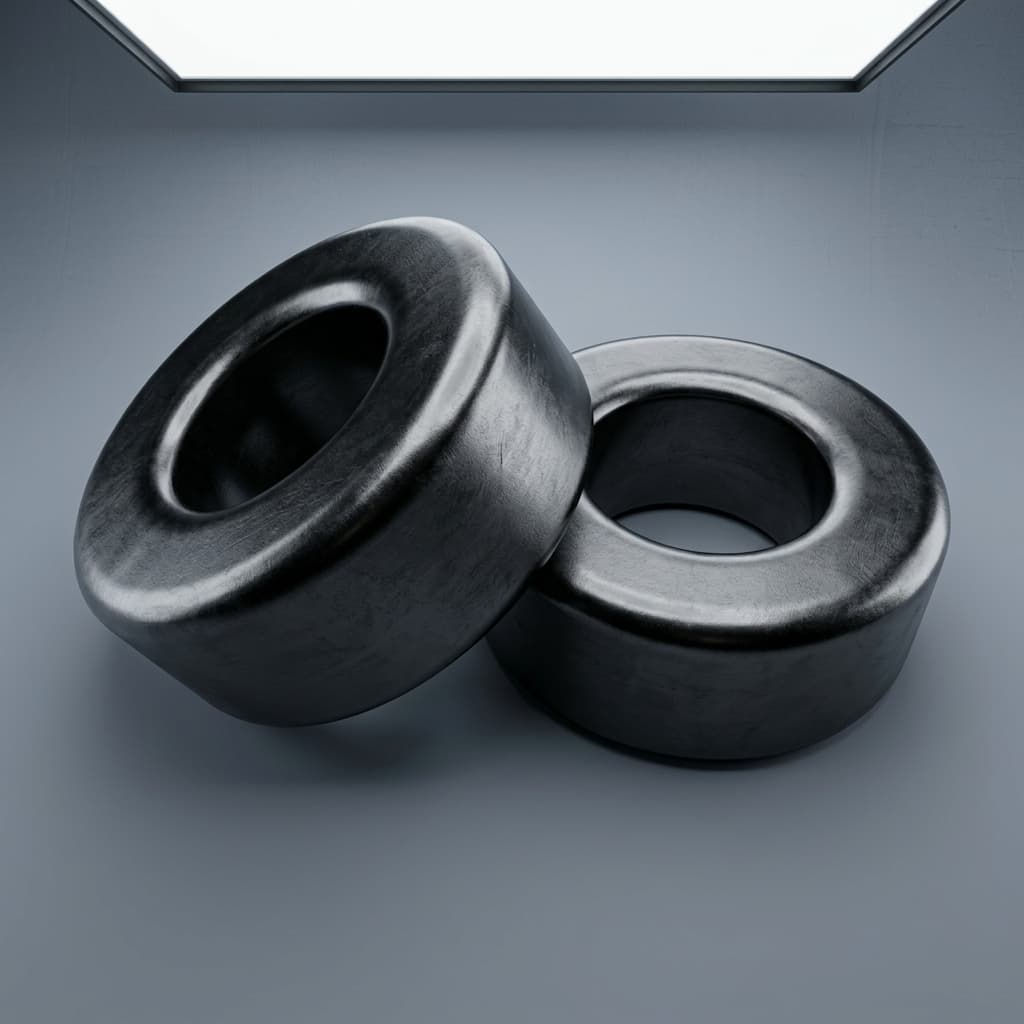
SmCo5 vs Sm2Co17: How to Choose for High-Temperature Programs
A practical selection guide for engineering and sourcing teams comparing SmCo5 and Sm2Co17 under thermal, corrosion, and lifecycle constraints.
Selecting between SmCo5 and Sm2Co17 is usually a system trade-off, not a catalog decision. Both are samarium cobalt families, but they behave differently when your program pushes temperature limits, field stability, and long service life.
Grade Selection Logic (Visual)
Start with the Operating Window
Before grade discussion, lock boundary conditions:
- continuous operating temperature
- peak temperature and duration
- magnetic circuit sensitivity to flux drift
- corrosion exposure and coating restrictions
- target service life and maintenance access
If these are unclear, first samples are usually non-representative.
Quantitative Degradation: Hcj vs. Temperature
To understand the real-world difference, look at the Intrinsic Coercivity (Hcj) retention as temperature rises. While Remanence (Br) dictates signal strength, Hcj dictates whether the magnet permanently loses that strength after a thermal spike.
When SmCo5 Is a Better Fit
SmCo5 is often preferred when your main goal is stable baseline performance with manageable thermal stress and straightforward geometry.
Typical fit:
- moderate-to-high temperature duty with controlled peaks
- tighter cost sensitivity at prototype stage
- simpler shapes where process yield needs to be stabilized quickly
When Sm2Co17 Is a Better Fit
Sm2Co17 is often chosen when thermal headroom and field retention margin dominate.
Typical fit:
- higher temperature ceiling with longer high-heat dwell
- stricter irreversible loss control requirements
- mission or safety-critical assemblies that cannot tolerate drift
RFQ Inputs That Prevent Rework
For either grade, send the same minimum technical package in RFQ:
- target grade window (or acceptable alternatives)
- geometry drawing with tolerances
- magnetization direction requirements
- operating and peak temperature profile
- validation criteria and test method
- quantity split by prototype, pilot, and production
Without this package, suppliers quote assumptions, and cross-supplier comparisons become noisy.
Field Evidence Snapshot
| Program Type | Initial Grade Path | Result After Thermal Validation |
|---|---|---|
| Sensor module, high drift sensitivity | Sm2Co17 first | Passed with lower irreversible drift |
| Cost-sensitive pilot with moderate thermal load | SmCo5 first | Faster early yield stabilization |
Final choice should always follow sample data under real duty, not brochure values.
Real-World Teardown: The "Over-Spec" Trap
A recent audit for an aerospace actuator OEM perfectly illustrates why grade mapping matters.
The engineering team originally specified a premium Sm2Co17 (YXG32) grade for a fuel valve actuator to maximize safety margin. The operating temperature was only 180°C. During prototype assembly, the factory reported a 15% scrap rate due to edge chipping when the magnets were pressed into the titanium rotor sleeve.
The Root Cause: Sm2Co17 is inherently more brittle than SmCo5. Because the actual thermal ceiling (180°C) was well within SmCo5's capability, the use of Sm2Co17 provided zero additional thermal benefit but introduced massive mechanical integration risk.
The Fix: We downgraded the material to SmCo5 (YG24) and added a 0.3mm x 45° chamfer to all edges.
The result? Irreversible loss remained at 0% during 180°C thermal shock testing, but assembly scrap dropped to < 1%, saving the customer $12,000 per pilot run.
Grade Selection Worksheet (Buyer Side)
Use this worksheet before RFQ lock:
| Item | Your Entry |
|---|---|
| Continuous operating temperature | |
| Peak temperature + dwell | |
| Allowable irreversible loss | |
| Geometry and tolerance constraints | |
| Magnetization direction constraints | |
| Prototype quantity / schedule | |
| Pilot quantity / schedule | |
| Preferred primary grade | |
| Fallback grade path |
Completing this worksheet before supplier engagement usually improves quote comparability and shortens decision cycles.
Related Internal Guides
- 34 Grade Samarium Cobalt Magnet Quote Checker
- 34 Grade Samarium Cobalt Magnet Characteristics
- SmCo vs NdFeB High-Temperature Decision Guide
- SmCo RFQ Checklist for OEM Buyers
- SmCo5 Magnets Product Page
- Sm2Co17 Magnets Product Page
External Standards and References
- IEC 60404 search portal (magnetic materials standards)
- ASM International overview: permanent magnets
Need help locking grade path with validation gates and RFQ criteria? Contact [email protected] or use WhatsApp.
Author

Application Engineering Specialist & Founder at SmCoSupply. Expert in high-temperature samarium cobalt magnet applications and OEM production scaling.
- Reviewed against real RFQ and sample handoff workflows.
- Updated when buyer-side acceptance criteria materially change.
- Intended for engineering and procurement decision support.
Categories
More Posts
SmCo Magnets for Gas Turbine Speed Sensors: Engineering & Selection Guide
A deep-dive execution brief for selecting, protecting, and validating SmCo magnets in high-temperature gas turbine speed sensor applications.
SmCo Machining and Tolerance Risk Control Guide
A risk-control guide for SmCo machining and tolerance planning to reduce brittle-material defects and improve assembly yield.

SmCo Incoming Inspection Checklist for OEM Teams
A practical incoming inspection checklist for SmCo programs that reduces lot-to-lot variability and shortens supplier feedback loops.