
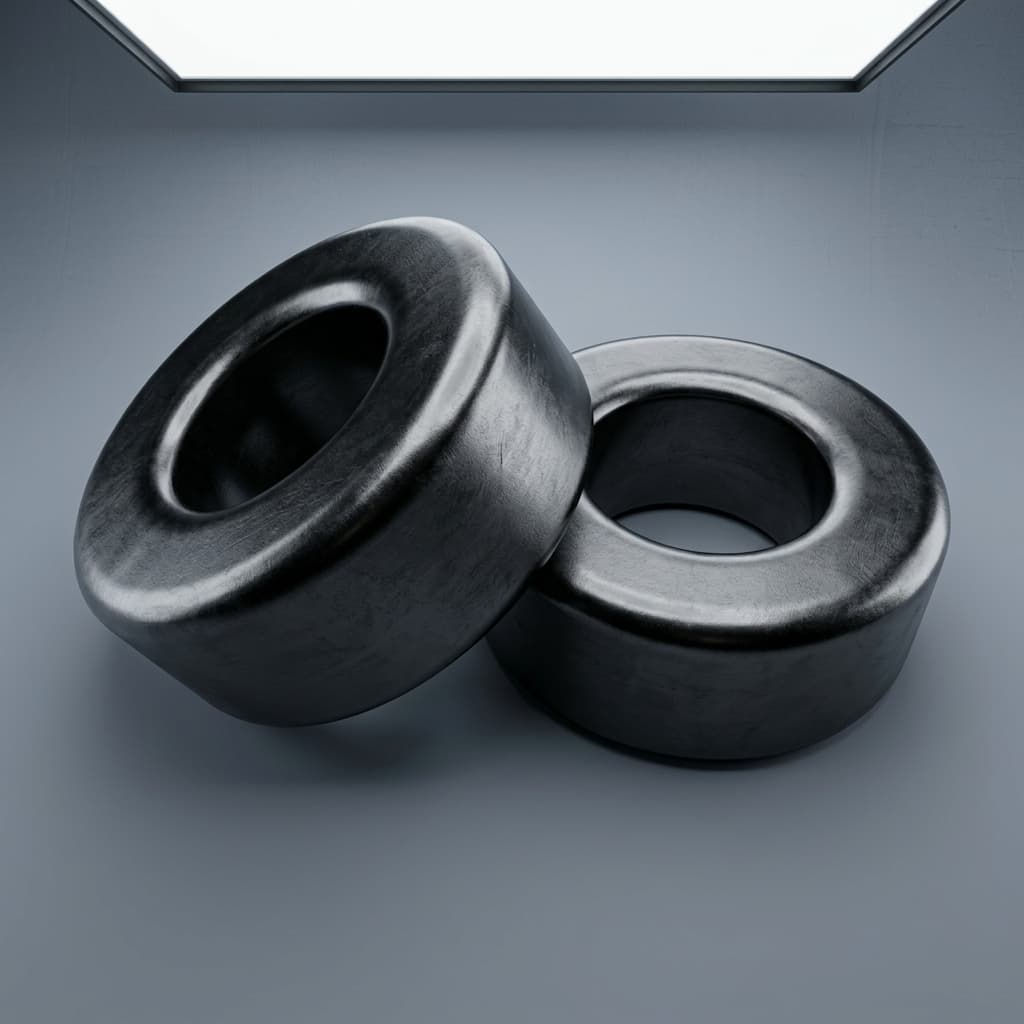
When Do SmCo Magnets Need Plating? A Corrosion Resistance Guide
SmCo magnets often need no plating. Use this corrosion resistance guide to decide when bare, nickel, epoxy, Parylene, or titanium finishes fit your RFQ.
In the world of high-performance permanent magnets, over-specification is a silent budget killer. For procurement teams and engineers transitioning from Neodymium (NdFeB) to Samarium Cobalt (SmCo) magnets, one of the most common—and costly—mistakes is copy-pasting the surface plating requirements from legacy drawings.
If you are currently paying to apply Nickel-Copper-Nickel (Ni-Cu-Ni) plating to a Samarium Cobalt magnet designed for a high-temperature industrial application, there is a very high probability that you are wasting money, unnecessarily extending your lead times, and introducing new thermal failure modes into your assembly.
SmCo magnets possess inherent, exceptional corrosion resistance due to their unique metallurgical composition. In supplier-side RFQ reviews for enclosed industrial, automotive, aerospace, and oilfield assemblies, the default finish is often uncoated rather than plated. Understanding the physical boundary conditions of when to coat—and when to leave the magnet bare—is a critical competency for modern purchasing and engineering teams looking to optimize total cost of ownership (TCO) and maximize supply chain efficiency.
This comprehensive guide will unpack the metallurgical realities of SmCo corrosion resistance, explore the hidden costs of unnecessary plating, define exact environmental boundaries through a structured decision matrix, and provide a definitive checklist for your next RFQ.
Scope and review date (reviewed July 24, 2026): This guide is written for global OEM procurement, mechanical engineering, and supplier-quality teams specifying sintered SmCo5 magnets, Sm2Co17 magnets, and custom SmCo magnet assemblies. It is an RFQ-screening framework, not a substitute for supplier datasheets, lot-specific corrosion testing, medical biocompatibility review, or customer validation in final operating media. If your application includes direct tissue contact, direct salt fog, sterilization chemistry, or unusual process fluids, treat coating selection as a qualification item before production release.
For drawing-specific finish advice, send the operating medium, peak temperature, cleanliness class, and current finish callout through the SmCoSupply contact page.
The "NdFeB Habit" in Magnet Sourcing
To understand why SmCo magnets are frequently over-specified with plating, we must first look at the dominance of Neodymium Iron Boron (NdFeB) magnets in the global supply chain.
NdFeB magnets contain a massive amount of free iron—often upwards of 60-70% by weight. When this free iron is exposed to ambient humidity, oxygen, or mild acidic environments, it rapidly oxidizes. This is not a superficial rust; NdFeB oxidation penetrates deeply into the grain boundaries of the sintered microstructure, causing the magnet to physically swell, crack, and ultimately disintegrate into magnetic powder. Because of this fatal vulnerability, practically 100% of sintered NdFeB magnets require robust surface protection—typically a triple-layer electrolytic Ni-Cu-Ni plating, or sometimes epoxy, zinc, or phosphate passivation.
When engineering teams migrate a motor or sensor design from NdFeB to SmCo—usually to unlock higher operating temperatures or greater magnetic stability—they often leave the Finish: Ni-Cu-Ni callout on the engineering drawing. Procurement teams dutifully send this drawing out for RFQ, and magnet suppliers quote it exactly as requested without challenging the specification. This is what we call the "NdFeB Habit."
Samarium Cobalt is fundamentally different. Whether you are dealing with SmCo5 (1:5) or Sm2Co17 (2:17), the iron content is either zero (in the case of pure SmCo5) or significantly reduced and alloyed with cobalt, copper, and zirconium (in the case of Sm2Co17). Cobalt does not oxidize in the same catastrophic, structurally compromised manner as iron. Instead, bare SmCo exposed to atmospheric moisture may slowly develop a microscopic, superficial patina—a passivated oxide layer that rarely exceeds a few microns in depth. This patina does not impact the bulk magnetic performance, nor does it cause the magnet to swell, flake, or physically break down.
In short: NdFeB rusts from the inside out; SmCo simply tarnishes on the very surface. For the vast majority of internal mechanical assemblies—such as enclosed rotors, hermetically sealed sensors, or gearboxes—this superficial tarnish is completely irrelevant.
The Hidden Costs of Unnecessary Plating
When you mandate a coating on a SmCo magnet that does not actually need one, you are not merely adding a line item to the bill of materials. You are fundamentally altering the manufacturing process, injecting cost, and degrading the agility of your supply chain.
- Direct Piece Price Impact: Electrolytic plating (like Ni-Cu-Ni) requires specialized barrel or rack plating equipment, chemical baths, and wastewater treatment. Applying a quality 10-20 micron Ni-Cu-Ni layer to SmCo typically adds between 5% to 15% to the final piece price, depending on the volume and the complexity of the magnet's geometry.
- Extended Lead Times: Plating is a distinct, time-consuming secondary operation. Moving a batch of magnets from the grinding facility to the plating line, running the electroplating cycle, baking the magnets to relieve hydrogen embrittlement, and conducting final visual and dimensional inspections typically adds 5 to 10 days to the production schedule. In tight aerospace or defense supply chains, losing a week to an unnecessary plating step is unacceptable.
- Yield and Scrap Rates: SmCo is notoriously brittle. Every time the magnets are handled, tumbled in a plating barrel, or clamped in a rack, there is a risk of edge chipping. Plating inevitably increases the mechanical handling steps, thereby increasing the scrap rate. The supplier bakes this anticipated scrap rate into the unit price you pay.
- Dimensional Tolerance Stack-ups: A standard Ni-Cu-Ni plating adds roughly 10-20 microns (0.01-0.02 mm) per surface. If your engineering drawing demands ultra-tight mechanical tolerances for a precision press-fit assembly, the plating thickness variation across different batches can push the final dimensions out of spec, leading to assembly line headaches.
The High-Temperature Blistering Risk
Perhaps the most critical reason to avoid plating SmCo is the risk of high-temperature failure. SmCo is chosen precisely because it can operate at extreme temperatures—often between 250°C and 350°C.
Electrolytic coatings, particularly Ni-Cu-Ni, have different coefficients of thermal expansion (CTE) compared to the underlying sintered SmCo substrate. When the magnet experiences rapid thermal cycling or sustained exposure to temperatures exceeding 250°C, the interfacial stress between the plating layer and the magnet body grows immense.
Furthermore, any trapped moisture, residual plating salts, or outgassing elements beneath the plating layer will vaporize at these temperatures. The expanding gases, combined with the CTE mismatch, cause the Ni-Cu-Ni plating to blister, peel, or flake off inside the application. If a flake of conductive nickel peels off a high-speed rotor spinning at 50,000 RPM, it can bridge a gap, short an electrical circuit, or catastrophically jam the air gap between the rotor and the stator.
By demanding a coating to "protect" the magnet, you may ironically be introducing the exact failure mode that destroys your assembly. Uncoated SmCo, having no plating to peel, is immune to this specific failure mechanism at 350°C.
Visual Decision Guide: To Coat or Not to Coat?
Environmental Decision Matrix
To remove ambiguity, engineering and procurement should rely on defined environmental boundary conditions. Use the following structured table to determine if your application warrants plating.
| Application Environment | Primary Risk Factor | Recommended SmCo Finish | Engineering Rationale | Cost Impact | Typical Industry |
|---|---|---|---|---|---|
| High-Temp Enclosed Air (up to 350°C) | Thermal Shock, Peeling | Uncoated | Coatings will blister and fail due to CTE mismatch at extreme temps. | Baseline Cost | Aerospace, Servo Motors |
| Ultra-High Vacuum (UHV) | Outgassing, Contamination | Uncoated | Organic coatings and porous electro-platings trap volatile gases that ruin vacuum integrity. | Baseline Cost | Spacecraft, Semiconductor |
| Oil-Filled Gearboxes & Downhole | High Pressure, Fluid Shear | Uncoated | SmCo is chemically stable in synthetic oils. Plating offers no benefit and adds failure risk. | Baseline Cost | Oil & Gas (MWD/LWD) |
| General Indoor Ambient | Mild Humidity | Uncoated | SmCo naturally forms a passive oxide layer that prevents deeper degradation. | Baseline Cost | Industrial Automation |
| Medical Implant / Biocompatibility | Cellular Toxicity | Parylene or Titanium | Bare cobalt can leach and is toxic to biological tissue; hermetic barrier is required. | High (+15-25%) | Medical Devices |
| Severe Salt Spray / Direct Marine | Chloride Ion Attack | Epoxy or NiCuNi | Continuous salt fog will eventually pit SmCo surfaces over months of exposure. | Moderate (+10%) | Naval / Offshore Sensors |
| High-Speed Automated Assembly | Micro-Dust Generation | Flash Nickel / Zinc | Prevents microscopic magnetic dust from sticking to assembly fixtures during handling. | Low (+5%) | Consumer Electronics |
If coating risk is only one part of the material choice, pair this matrix with the SmCo5 vs. Sm2Co17 selection guide before freezing the drawing. If the finish callout is already in an RFQ package, use the SmCo RFQ checklist to capture missing test conditions before suppliers quote the job.
Deep Dive: When to Leave SmCo Uncoated
1. Ultra-High Vacuum (UHV) and Space Applications
In satellite reaction wheels, ion thrusters, and semiconductor lithography machines, the operating environment is a deep vacuum. Any material placed in this environment must be strictly evaluated for outgassing—the release of trapped volatile molecules. Electroplated coatings often trap hydrogen or plating salts within microscopic pores, while organic coatings like epoxy contain volatile solvents. In UHV environments, these trapped elements outgas, condensing on sensitive optical lenses or electrical contacts and ruining the equipment. Bare, ultrasonic-cleaned SmCo is the gold standard here.
2. High-Speed Enclosed Rotors
Consider a permanent magnet synchronous motor (PMSM) designed for an electric vehicle traction application or a high-speed spindle motor. The magnets are often glued into rotor slots or retained by a titanium or carbon fiber sleeve. The environment inside the rotor is sealed and dry, but temperatures frequently spike to 200°C. If the SmCo magnets are plated with NiCuNi, the plating acts as a weak mechanical boundary layer. High rotational shear stresses combined with thermal expansion can cause the plating to shear off the magnet substrate, leading to catastrophic rotor failure. Bare SmCo bonded directly with high-temperature adhesives provides superior structural integrity.
Deep Dive: When Coating is Actually Required
While rare, there are absolute hard boundaries where SmCo must be coated.
1. Medical and Biocompatible Applications
Cobalt is a heavy metal, and raw samarium cobalt can leach toxic ions if exposed directly to human blood or tissue. If the magnet is used inside a pacemaker, a dental implant, or any device with direct prolonged tissue contact, it absolutely must be hermetically sealed. Typically, this is achieved by welding the magnet inside a titanium laser-welded can, or by applying a pinhole-free Parylene-C conformal coating.
2. Extreme Cosmetic Requirements
In some high-end consumer audio equipment or luxury goods, the magnets are visible to the end-user. Uncoated SmCo has a dull, matte gray metallic appearance that can look mottled or tarnished over time. If the industrial design demands a bright, shiny, premium aesthetic, Ni-Cu-Ni plating is specified purely for cosmetic reasons, assuming the application temperature remains near room temperature.
SmCo Coating Engineering & RFQ Checklist
If you are a procurement professional or a mechanical engineer finalizing a drawing, use this checklist before you send your RFQ to a supplier like SmCo Magnets. Resolving these points early prevents costly engineering change orders (ECOs) later.
- Verify Legacy Carryovers: Does the drawing say "Ni-Cu-Ni" simply because the previous iteration used NdFeB? If yes, challenge the engineering team to remove it.
- Check Peak Temperatures: Does the continuous or peak operating temperature exceed 200°C? If yes, strongly advise against electrolytic metallic plating to prevent blistering.
- Assess the Operating Medium: Will the magnet be submerged in oil, hydraulic fluid, or inert gas? If yes, leave the magnet uncoated.
- Review Adhesive Compatibility: If the magnet will be glued, confirm with your adhesive supplier (e.g., Loctite) whether they prefer bonding to bare SmCo or a coated surface. Often, bare SmCo requires a primer but yields higher shear strength.
- Check Cleanliness Specs: If the assembly requires ISO Class 5 cleanroom handling, consider a thin protective flash coating to suppress micro-dusting, but balance this against outgassing risks.
- Specify Salt Spray Hours: If you must coat the magnet due to marine exposure, explicitly define the ASTM B117 salt spray test requirement (e.g., 96 hours) rather than just specifying a coating type.
Frequently Asked Questions (FAQ)
Q: Will uncoated Samarium Cobalt magnets rust if left in a humid warehouse?
A: No. Unlike NdFeB, SmCo does not contain free iron that causes progressive structural rust. It may develop a dull, slightly discolored surface patina over months in high humidity, but this oxidation is strictly superficial and does not degrade the magnetic flux or structural integrity.
Q: We are using SmCo in an downhole MWD tool where it will be exposed to drilling mud. Should we coat it?
A: Typically, no. SmCo is highly resistant to the chemicals found in synthetic drilling muds and crude oil. Furthermore, the extreme temperatures and pressures at the bottom of the wellbore will likely destroy any plating you apply. Bare SmCo is the standard for downhole oil and gas applications.
Q: Does plating a SmCo magnet make it physically stronger or less brittle?
A: Marginally, but not enough to solve fundamental mechanical design flaws. While a thick layer of ductile metal (like copper or zinc) can slightly dampen impact forces, SmCo remains a brittle ceramic-like material. Plating will not prevent a magnet from cracking if it is subjected to heavy mechanical shock or improper press-fitting.
Q: If we remove the Ni-Cu-Ni plating, do we need to change the magnetic tolerances?
A: No, the magnetic tolerances remain the same. However, you should account for the dimensional shift. Plating usually adds 10-20 microns per surface. If you remove the plating, the bare magnet will be slightly smaller unless you update the nominal dimensions on your drawing.
Field Evidence Snapshot
- Finish reviews often reveal inherited NdFeB plating notes on SmCo drawings, especially when the original part family moved from lower-temperature magnets to SmCo without a full drawing cleanup.
- High-temperature failures are more often caused by coating blistering, delamination, or trapped residues than by bulk SmCo corrosion in enclosed assemblies.
- Coating decisions should be tied to medium, temperature, cleanliness, and contact risk; "corrosion protection" alone is too vague for a controlled RFQ.
Related Internal Guides
- SmCo Magnet Adhesive Bonding for High-Temperature Rotors
- SmCo Magnet Assembly Risk Control
- SmCo5 vs Sm2Co17 Selection Guide
- SmCo RFQ Checklist for OEM Buyers
Conclusion and Next Steps
The next time you review a bill of materials containing Samarium Cobalt magnets, take a hard look at the surface finish requirement. In the high-stakes environments where SmCo excels—extreme heat, deep vacuum, and aggressive chemical exposure—less is almost always more. Stripping unnecessary coatings from your engineering drawings is one of the fastest, most effective ways to drive down component costs, shorten lead times, and improve the thermal reliability of your final product.
If your engineering team is unsure whether an application strictly requires plating, do not guess and over-spec.
Take Action: Send your operating environment parameters and current drawing to our engineering support team. We will review your thermal, environmental, and mechanical constraints and provide a definitive recommendation on the most cost-effective surface finish—or lack thereof—for your specific application. Use the technical consultation form to share the drawing, peak temperature, medium, cleanliness requirement, and target production volume.
External Standards and References
- IEC 60404-8-1:2023 – International Electrotechnical Commission specification family for hard magnetic materials, including permanent magnet material classes used in supplier data sheets. Available at: https://webstore.iec.ch/en/publication/68440
- NASA Outgassing Data for Spacecraft Materials – Critical guidelines on material selection for UHV environments, demonstrating the risks of organic and electroplated coatings in vacuum. Available at: https://outgassing.nasa.gov/
- Arnold Magnetic Technologies RECOMA SmCo Magnets – Supplier technical reference for samarium cobalt magnet families, high-temperature capability, and corrosion-resistant application positioning. Available at: https://www.arnoldmagnetics.com/products/recoma-samarium-cobalt-magnets/
Author

Application Engineering Specialist & Founder at SmCoSupply. Expert in high-temperature samarium cobalt magnet applications and OEM production scaling.
- Reviewed against real RFQ and sample handoff workflows.
- Updated when buyer-side acceptance criteria materially change.
- Intended for engineering and procurement decision support.
Categories
More Posts
SmCo Magnet Assembly Risk Control: Preventing Chipping and Cracking
Engineering and procurement guide to reducing assembly scrap, preventing SmCo magnet chipping, and choosing safer integration methods for OEM builds.
SmCo Magnet End-Use Certificates (EUC) and Export Controls: 2026 Sourcing Compliance Guide
Understand the rising requirements for End-Use Certificates (EUC), export controls, and supply chain traceability when sourcing SmCo magnets globally.
SmCo Sample-to-Mass-Production Handover Playbook
A handover playbook for moving SmCo programs from sample approval to stable mass production without hidden specification drift.